
(An edited and retitled repost of “Remembrance, Sacrifice, and Freedom” from 5-25-20, honoring my father, H. Asbury Neely and all veterans.)
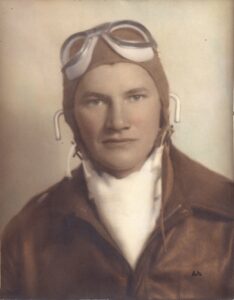
In the mid-1950s, before I was born, my parents went to Switzerland to see the place where my father was held prisoner after his plane was shot down during WWII.
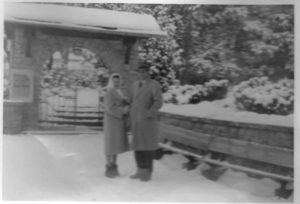
They traveled to the little town of Adelboden and had their picture made in front of the Interned American Soldiers Gate. They went to the old hotel high on the mountain above Adelboden where my father and other detainees were held captive.
While a picturesque hotel in the Swiss alps sounds like something straight out of the pages of Heidi, the time of my father’s imprisonment was anything but idyllic. The hotel was unheated, showers were cold and infrequent, food was sparse, news from home and about the war was minimal, and emotional damage occurred. While they didn’t suffer the brutality of German POW camps, my father and his comrades were prisoners, nonetheless.
Unknowns
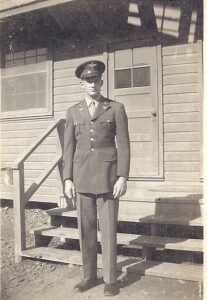
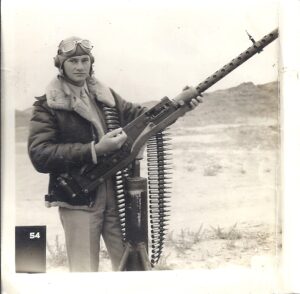
My father was in the U.S. Army Air Corps and trained in Alamogordo, New Mexico before being sent to North Africa. He was stationed in Algiers and Tunisia, flying bombing missions over Germany. On one mission, the bomb bay doors failed to open all the way. In a daring move, my father walked the catwalk between the partially opened doors, and manually forced the bombs to drop.
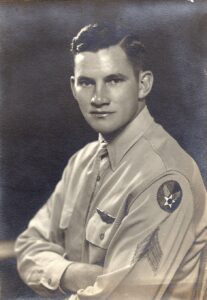
Each mission was fraught with tension, anxiety, and uncertainty. Each mission might be the last for someone, or for the whole crew. Each mission might be the one that resulted in capture or death.
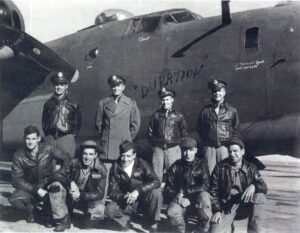
On the day my father’s plane was shot down, he and his crew bailed out. Once on the ground, they didn’t know where they were. They walked until they came to a border and were faced with the decision of whether to cross over. Were they safe where they stood, or in eminent danger? They crossed the border and were later captured by the Swiss.

Back home, my father’s father came home from his lumber yard one day and noticed my grandmother had circled a date on the calendar in red. When he questioned her about the date, she said she didn’t know why, but the Lord told her to circle that date and pray. “I circled that same date today on my calendar at the yard,” said my grandfather. Believing they had received a message from God, my grandparents prayed for my father and whatever the date they each circled would bring.
The date they circled on their calendars came and went. Weeks later, news came that my father was missing in action. The date his parents circled on their calendars was the date of my father’s last mission.
Freedom
Occasionally, my father and other prisoners were taken into the town of Adelboden and allowed to receive Red Cross packages and make a purchase. My father noticed that each time he saw a certain man in town one of his fellow prisoners disappeared.
Finally, my father approached the man. Speaking to him in Swiss-German, my father said simply, “I want you to get me out of here.” The man shrugged and said, “I don’t know what you are talking about.” My father pulled up his sleeve and showed several watches he had accumulated during the war. “Does this help you understand?” he asked the man. Those watches bought my father’s freedom.
Weeks later, the man gave my father instructions and helped him escape through the Underground.
Unrecognized
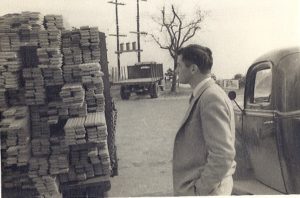
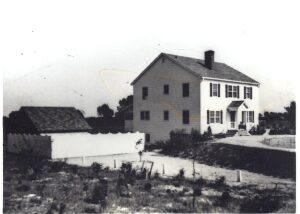
After WWII, my father returned home and resumed constructing houses, something he was already doing before being drafted. He owned a successful real estate and construction company and chose not to apply for VA benefits. Like many of that era, he was determined to put lingering memories of war behind him and felt accepting benefits somehow implied that he wasn’t capable of earning a living without help.
After my father’s death, I attempted to access those benefits for my mother, plowing through mountains of paperwork and meeting with the local VA representative. I quickly learned that WWII internees were not considered prisoners of war because records of their time as detainees had been “lost in a fire.”
Although WWII internees may go unrecognized as prisoners, it doesn’t change the fact that they were. Like Vietnam veterans, who were mistreated and shunned by an ungrateful public, WWII internees were also forgotten.
Perspective
Today, most of us don’t have any idea the level of suffering war veterans endured. All our complaints about government and inconveniences pale in comparison to the physical and emotional damage veterans sustained. Current generations have little knowledge of, or gratitude for, veterans and their sacrifices, and even less appreciation for the freedoms we enjoy, yet often take for granted.
It’s time for a perspective adjustment. Instead of fault-finding, blame-placing, criticizing, ranting, and demonstrations, it’s time for a focus shift to gratitude, thankfulness, and acknowledgment of freedoms and those who fought to ensure them.
Let’s rekindle forward motion by remembering, respecting, and reaffirming. The freedoms we enjoy today rest on the sacrifices of the past. Let us never forget those who gave so much to guarantee our freedom.
“Exercise your freedom by serving God, not by breaking the rules. Treat everyone you meet with dignity. Love your spiritual family. Revere God. Respect the government” (1 Peter 2:16-17 MSG).
©CandyArrington

Candy Arrington is an award-winning writer, blogger, and speaker. She often writes on tough topics with a focus on moving through, and beyond, difficult life circumstances. Candy has written hundreds of articles, stories, and devotions published by numerous outlets including: Inspiration.org, Arisedaily.com, CBN.com, Healthgrades.com, Care.com, Focus on the Family, NextAvenue.org, CountryLiving.com, and Writer’s Digest. Candy’s books include Life on Pause: Learning to Wait Well (Bold Vision Books), When Your Aging Parent Needs Care (Harvest House), and AFTERSHOCK: Help, Hope, and Healing in the Wake of Suicide (B&H Publishing Group).
To receive Candy’s blog, Forward Motion, via email, go to https://candyarrington.com/blog/ and scroll to the bottom to sign up.