

The origins of Memorial Day date back to the aftermath of the Civil War, when it was called Decoration Day, a time set aside to decorate the graves of fallen soldiers.
After World War I, Decoration Day was expanded to include those who died in all American Wars.
In 1971, by act of Congress, the name of the observance changed to Memorial Day and was declared a national holiday.
In 2000, Congress passed “The National Moment of Remembrance Act,” which designated 3:00 p.m. on Memorial Day as a moment to honor and remember “the men and women of the United States who died in the pursuit of freedom and peace.”
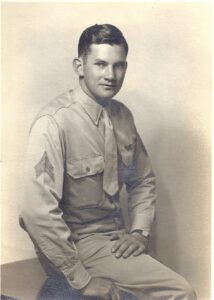
Remembering
Many in our country are unschooled in our history and have little understanding of the sacrifice so many made to ensure our freedom and the freedom of others. They have little appreciation for those who served and survived, many of whom carry deep mental and emotional scars.
Without those who fought in World War II, the landscape of our world, and our lives, would appear far different. Through long years of war, many sacrificed to bring an end to the tyrannical Nazi regime, synonymous with brutality, cruelty, prejudice, genocide, and oppression.
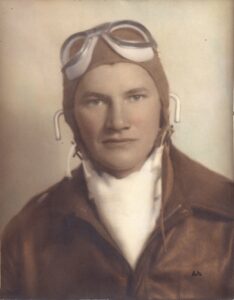
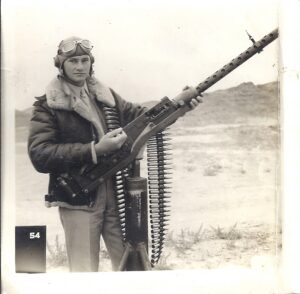
My Father’s WWII Service
My father served in the U. S. Army Air Corps during WWII. Following training in Alamogordo, New Mexico, and other locations, he was sent to North Africa. He was stationed in Algiers and Tunisia, flying bombing missions over Germany.
On one mission, the bomb bay doors failed to open all the way. In a daring move, my father walked the catwalk between the partially opened doors, and manually forced the bombs to drop. If he hadn’t, the heaviness of the load would have depleted fuel before they could return to base.
Each mission was rife with tension, anxiety, and uncertainty. Each mission might be the last for someone, or for the whole crew. Each mission held the potential for capture or death.
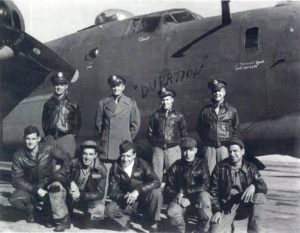
On the day my father’s plane was shot down, he and his crew bailed out. Once on the ground, they didn’t know where they were. They walked until they came to a border, where they faced a risky decision. Were they safe where they stood, or in eminent danger? They crossed the border and were later captured by the Swiss.
Escape
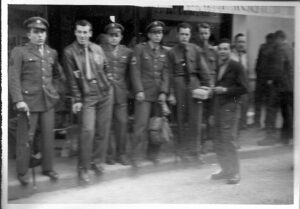
Occasionally, my father and other prisoners were taken into the town of Adelboden and allowed to receive Red Cross packages and make a purchase. My father noticed each time he saw a certain man in town one of his fellow prisoners disappeared.
Finally, my father approached the man. Speaking to him in Swiss-German, my father said simply, “I want you to get me out of here.” The man shrugged and said, “I don’t know what you are talking about.” My father pulled up his sleeve and showed watches he had accumulated during the war. “Does this help you understand?” he asked. Those watches bought Daddy’s freedom.
Weeks later, the man gave my father instructions and helped him escape through the Underground.
Learning
Several years ago, cousins contacted me, asking for information about Daddy’s WWII service. Their son’s class was studying WWII.
In a time when many want to erase the past, I’m glad teachers are still teaching history, especially the difficult parts. Current and future generations need to know what happened and realize the sacrifice many made for our freedom. It’s important to honor and remember those who gave so much for our liberty.
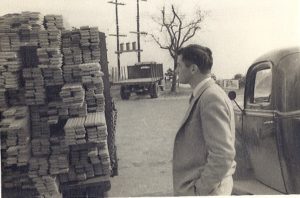
Personal Battles
After my father’s death, I uncovered an ancient cardboard box wedged into the back corner of the top shelf in his closet. Inside were remnants of his military service during World War II: a good conduct medal, his wings, war department ID, aircraft spotters’ guide, a 1943 Christmas menu from headquarters in Fortaleza, Brazil where he was stationed for a time, and the letter notifying my grandparents that my father was a prisoner of war.
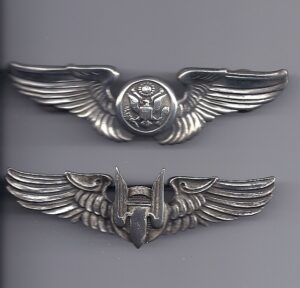
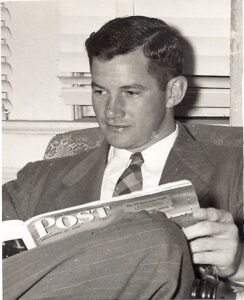
When my father returned to America, he didn’t talk much about his experiences. One of his brothers told me daddy sat in front of the radio, head bowed and arms on his knees, listening. If someone entered the room unexpectedly, daddy jumped, wary, eyeing the intruder with suspicion.
Today, my father’s post-war reactions would likely be labeled post-traumatic stress, but there was no name or counseling for it then. Daddy packed his emotional pain in a mental compartment and shoved it to the back of his mind in a similar fashion to the back-of-the-closet cardboard box housing the history of his military service.

Personal Liberation
Perhaps, although not a war veteran, your life has been fraught with battles, which left you scarred and defeated. Even now, remembering those battles brings emotional trauma and depression that halts forward motion. You don’t have to settle for living in this state. God provides an opportunity for healing and freedom through faith in Jesus Christ. Give Him your burdens, your trauma, your unhealed wounds, and experience true freedom.
“Stand fast therefore in the liberty by which Christ has made us free, and do not be entangled again with a yoke of bondage” (Galatians 5:1 NKJV).
©CandyArrington
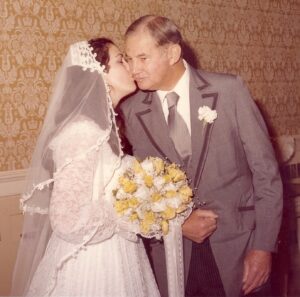
Candy Arrington is an award-winning writer, blogger, and speaker. She often writes on tough topics with a focus on moving through, and beyond, difficult life circumstances. Candy has written hundreds of articles, stories, and devotions published by numerous outlets including: Inspiration.org, Arisedaily.com, CBN.com, Healthgrades.com, Care.com, Focus on the Family, NextAvenue.org, CountryLiving.com, and Writer’s Digest. Candy’s books include Life on Pause: Learning to Wait Well (Bold Vision Books), When Your Aging Parent Needs Care (Harvest House), and AFTERSHOCK: Help, Hope, and Healing in the Wake of Suicide (B&H Publishing Group).
To receive Candy’s blog, Forward Motion, via email, go to https://candyarrington.com/blog/ and scroll to the bottom of the page to sign up.